Every refinery started with something everyone else calls garbage
In 1859, gasoline was the waste product. Kerosene was the crude's actual prize. Today, waste is the undervalued feedstock that nobody has finished pricing — and the refinery that unlocks them is already here.
Why now?
| Prime product | Kerosene (then) |
| Waste byproduct | Gasoline (then) |
| Revalued by | combustine engine |
| Prime product | Disposal (today) |
| Recovered value | H2/Water (today) |
| Revalued by | GH2E gasification |
Waste is the new crude — and the GH2E is its refinery
The first waste byproduct was crude's own oil. Before the automobile, each barrel had one job: yield kerosene for lamps. Gasoline — the fraction that now defines the entire industry — was a thin, volatile nuisance. Refiners burned it off or ran it into rivers because there was no process that saw value in it. That didn't mean the energy wasn't there. It meant the refinery hadn't caught up to the feedstock. The internal combustion engine changed the entire demand side of the equation, not the barrel itself. The same molecules that were a disposal problem in 1870 were the most valuable fraction of the barrel by 1920.
Waste has never described what a material is worth — only what we haven't yet figured out what to do with it. It's a label for the absence of a process, not an absence of value. Organic effluent, contaminated process water, high-TOC sludge — these carry a basic, measurable chemical energy density. What's been missing isn't the fuel. It's the refinery. That's the entire premise of the platform: a range of industrial waste streams, each abundant within its own sector and each written off as a liability. When they are in fact discarded crude, held back only by an inability to refine them into what they've always been ... a cleaner source of renewable fuel that promotes energy security, power diversity and higher relevance wherever carbon is being actively traded.
The distinction that matters for underwriting purposes isn't chemistry — it's always been a slave to timeline. The outputs are a proven, deployable revenue mechanism today. The other is a genuine technical frontier that has been defined by obscure colour charts, poor forecasting discipline and unrealistic expectations. NexusInnovest treats these issues as a mere distraction, not as a footnote citation.
Five hydrogen cores.
One treatment stage.
The 5:1 ratio isn't a brand flex — it's the point where core output and treatment capacity are sized to match, instead of guessed at.
5:1
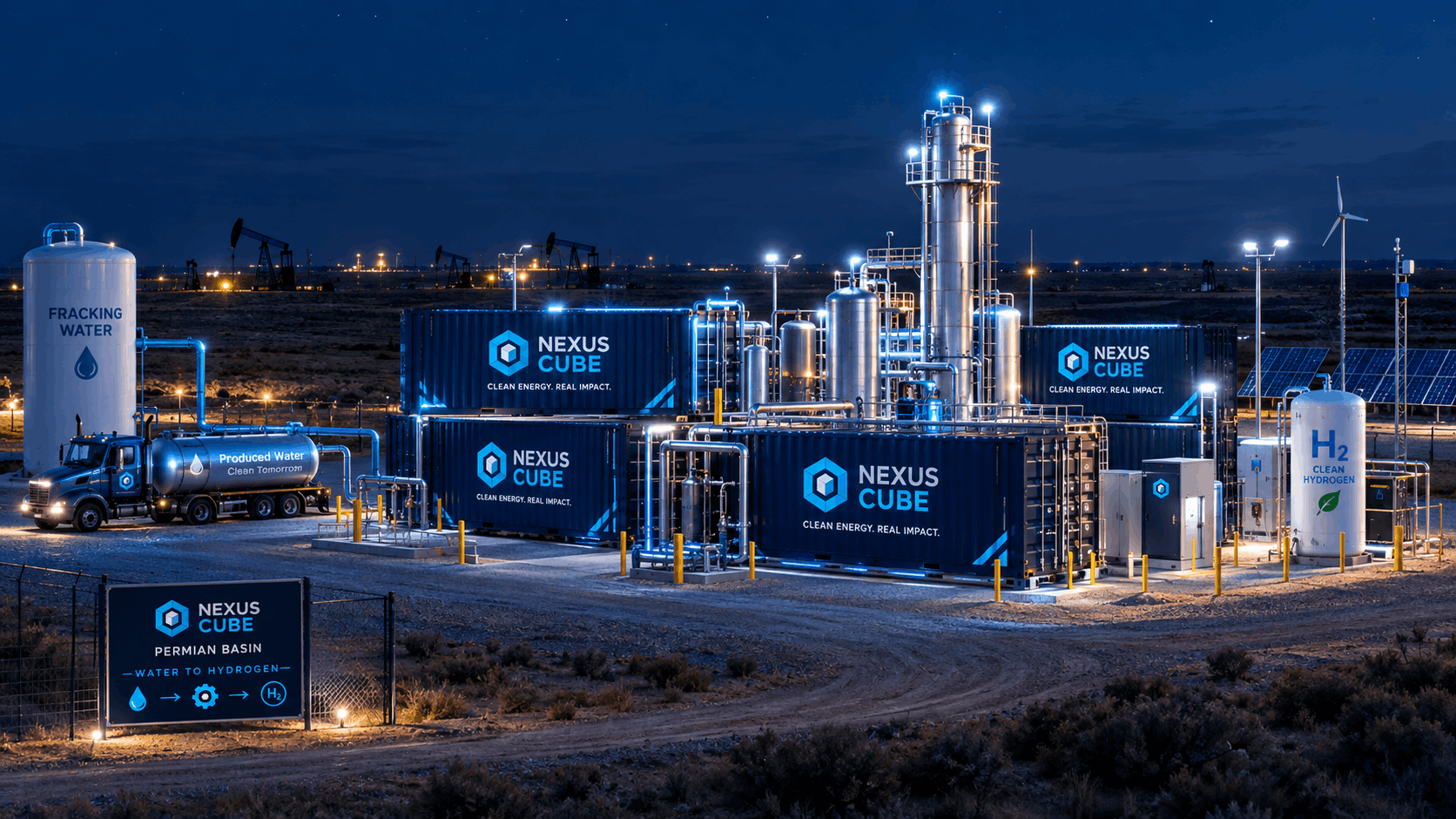
Five plasma gasification cores paired with one electrocoagulation unit inside a single deployable cube — the configuration at which the combined throughput capacity achieves dimensional returns and becomes asset-grade infrastructure.
Pair every hydrogen core with its own water treatment unit and the economics fall apart before deployment. Five Hydrosparq™ cores feed one Dimension Water™ unit built for their combined output: a single treatment stage, a single discharge point, one system to service.
The ratio also buys resilience the industry doesn't design in by default. Take one core offline for scheduled maintenance and the cube keeps running — four cores still feeding from the same electrocoagulation stage, producing hydrogen and treated water. There's no single point that halts delivery.
Nexus Cube (5:1)
1:1 core pairing — with 5 EC units
Centralised / hauled — (with trucking cost savings)
Two tracks. Multiple ecosystems.
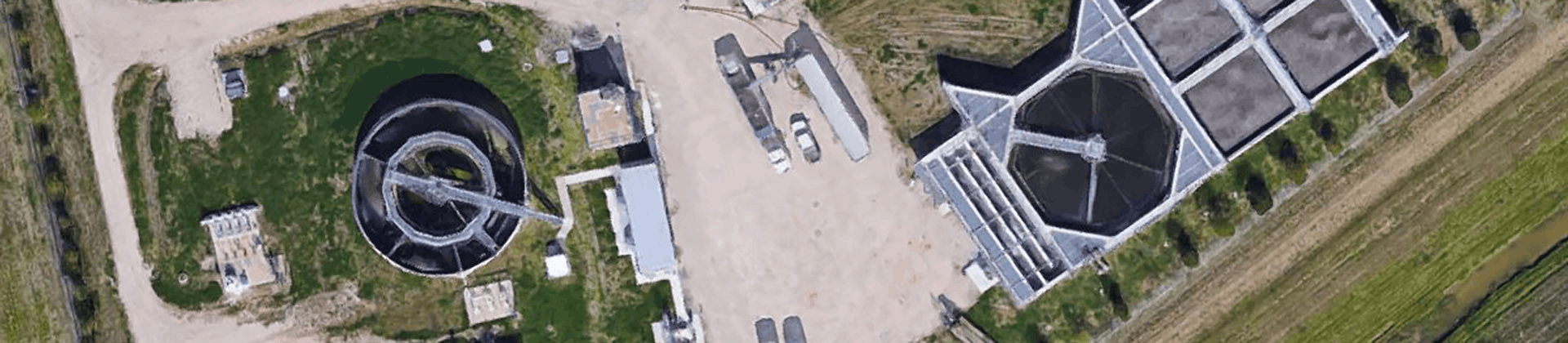

Track A
Treatment-as-a-service. Considered proven. Deployable now, generating revenue independent of hydrogen markets, carbon credit prices, or policy tailwinds.
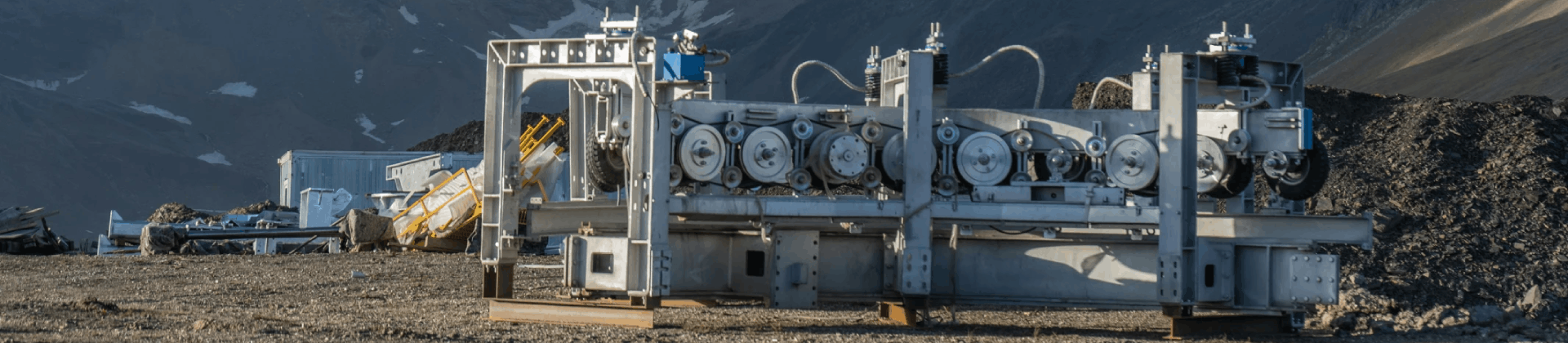
Track B
Hydrogen yield at scale. Contingent on unresolved characterisation of the electrocoagulation sludge cake's TOC/DOC composition — named here, not buried in an appendix.
 `
`Frequently Asked Questions
Isn't "waste" just a rebrand of trash-to-energy, which has existed for decades?
No — trash-to-energy typically burns waste for heat or electricity alone, while a GH2E platform splits the same feedstocks into multiple saleable outputs, as one seamless process without grids, grants or government subsidies.
If waste has this much value, why hasn't anyone captured it before now?
The chemistry has been understood for years, but the specific technologies needed to extract it profitably — commercial-scale plasma gasification and electrocoagulation — have recently matured enough to deploy together.
Does this mean NexusInnovest is claiming to solve the hydrogen economy?
Not entirely — hydrogen yield at scale (Track B) is a disclosed, unresolved execution question for the waste owner, while the treatment-as-a-service (Track A) is the proven half of the application design.
Why call it "new crude" instead of calling it a feedstock or fuel source?
The crude analogy is deliberate — as it points to gasoline's own history as a discarded byproduct that became the industry's most valuable product once the demand and proper refining process was fully developed.