Reliable, Renewable Hydrogen for Everyone
For industries and communities facing the combined threat of environmental risk, financial uncertainty and an unequal access to carbon-compliant fuel, there's no escaping some big decisions heading their way. In synergy, this cascading series of factors will represent the type of disruption that could take years to resolve across the established, developing and underserved markets upon which we all depend.
Overall, industry is projected to drive the majority of renewable hydrogen uptake until 2030, followed by a wider uptake in new applications by 2050. Applications and energy ecosystems with existing demand or easy-to-reach, underserved hydrogen markets will likely account for the majority of renewable hydrogen demand throughout the 2020s, and yet these scenarios have massive implications as regional markets add clarity to product classification, carbon credit schemes and fueling infrastructure objectives. Those are key variables that will drive a further increase in clean hydrogen's share of total hydrogen demand, from less than 1 percent in 2022 to around 30 percent by 2030, just as national Announced Pledged Scenario (APS) commitments become actionable and accountable.
The global hydrogen fueling station market is projected to grow from $0.54 billion in 2022 to $2.66 billion in 2029, at a CAGR of 25.6% over the forecast period.
As state, regional and international agencies begin to enforce minimum renewable requirements in energy supplies, autonomous production facilities will perform a key role throughout the decades-long transtition to carbon-neutrality. That is why local, modular alternatives that are not energy-grid dependent are such an important portfolio asset. They serve the greater goal of providing resilent, renewable energy to underserved markets first; and therefore, they can also scale up organically as hydrogen demand rises. This approach not only insulates investors from the elevated risks associated with large capital facilities, but also ensures tighter controls on operations which in turn leads to predictable pricing over the long term.
Our Nexus Plan for 2035
At NexusInnovest, our objectives in the carbon-negative energy market are clear, concise and achievable. Sustained hydrogen production at waste-to-energy facilties and marine port locations represents the front end of a 24/7 operation and distribution of hydrogen in its cleanest and cheapest form sets the benchmark for what comes next.
Stage One: Adoption
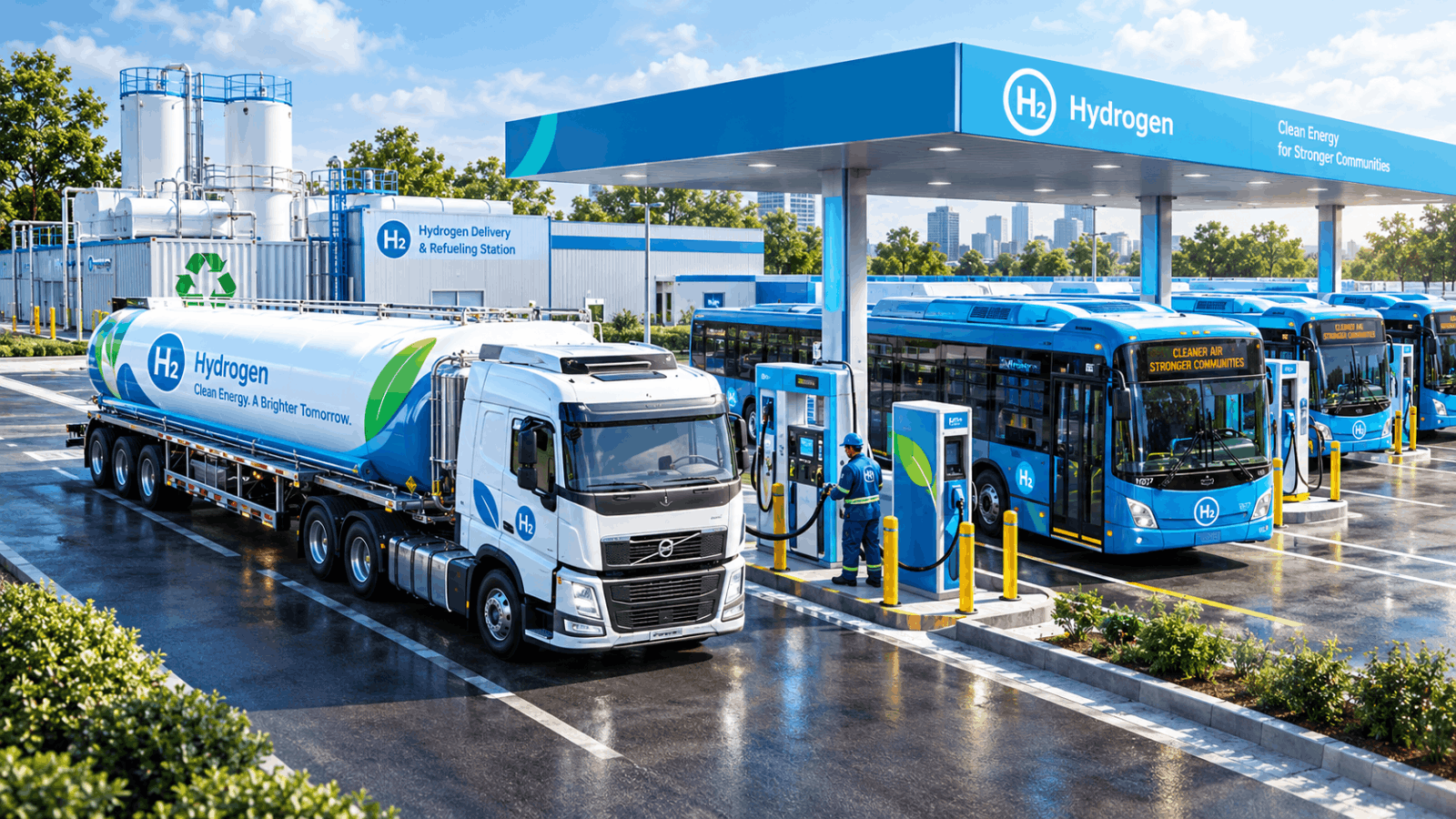
Anchor clients to support underserved fleets and mobility sectors
Stage Two: Expansion
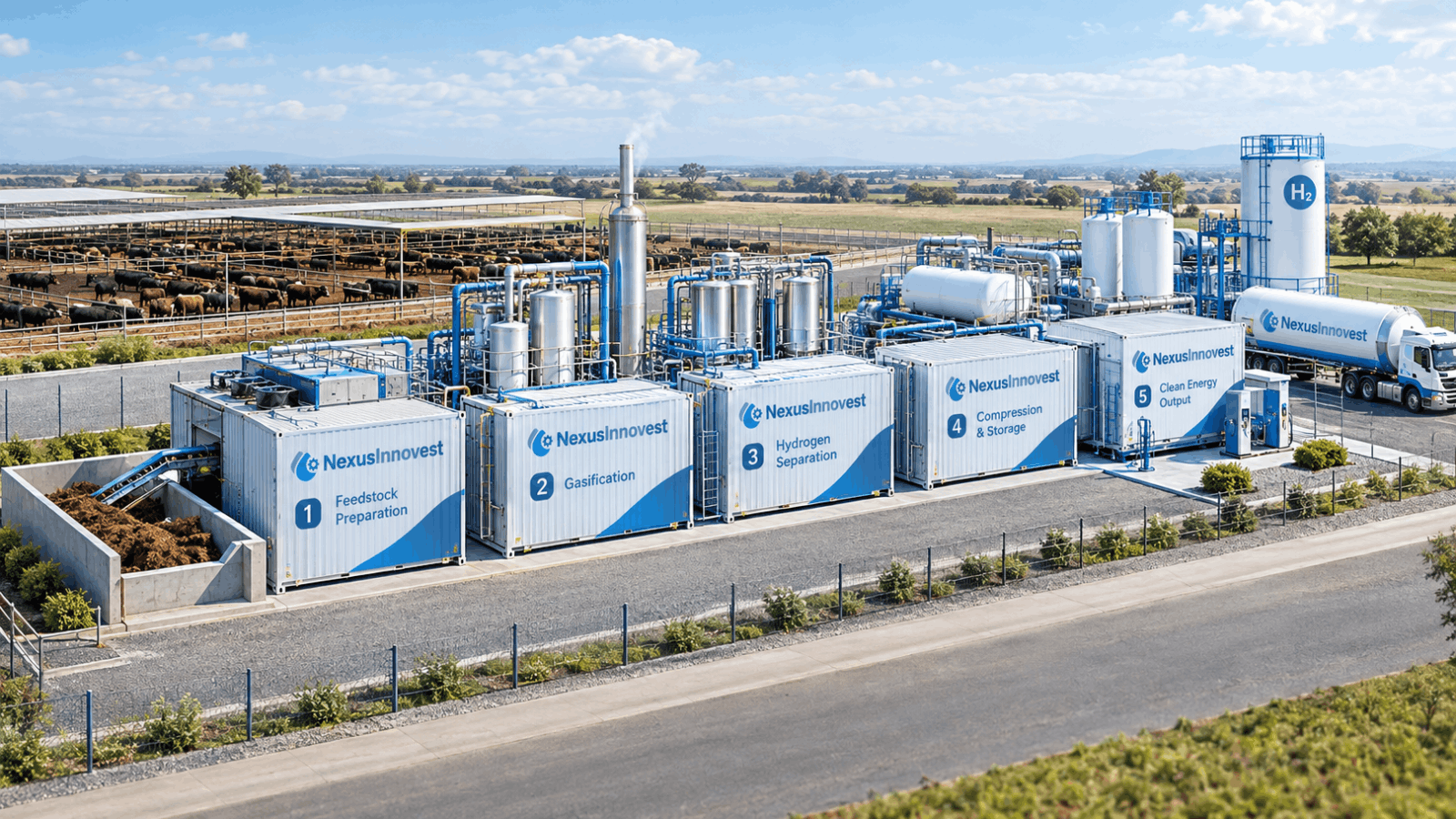
Joint ventures to accelerate hydrogen and carbon inventories
Stage Three: Footprint
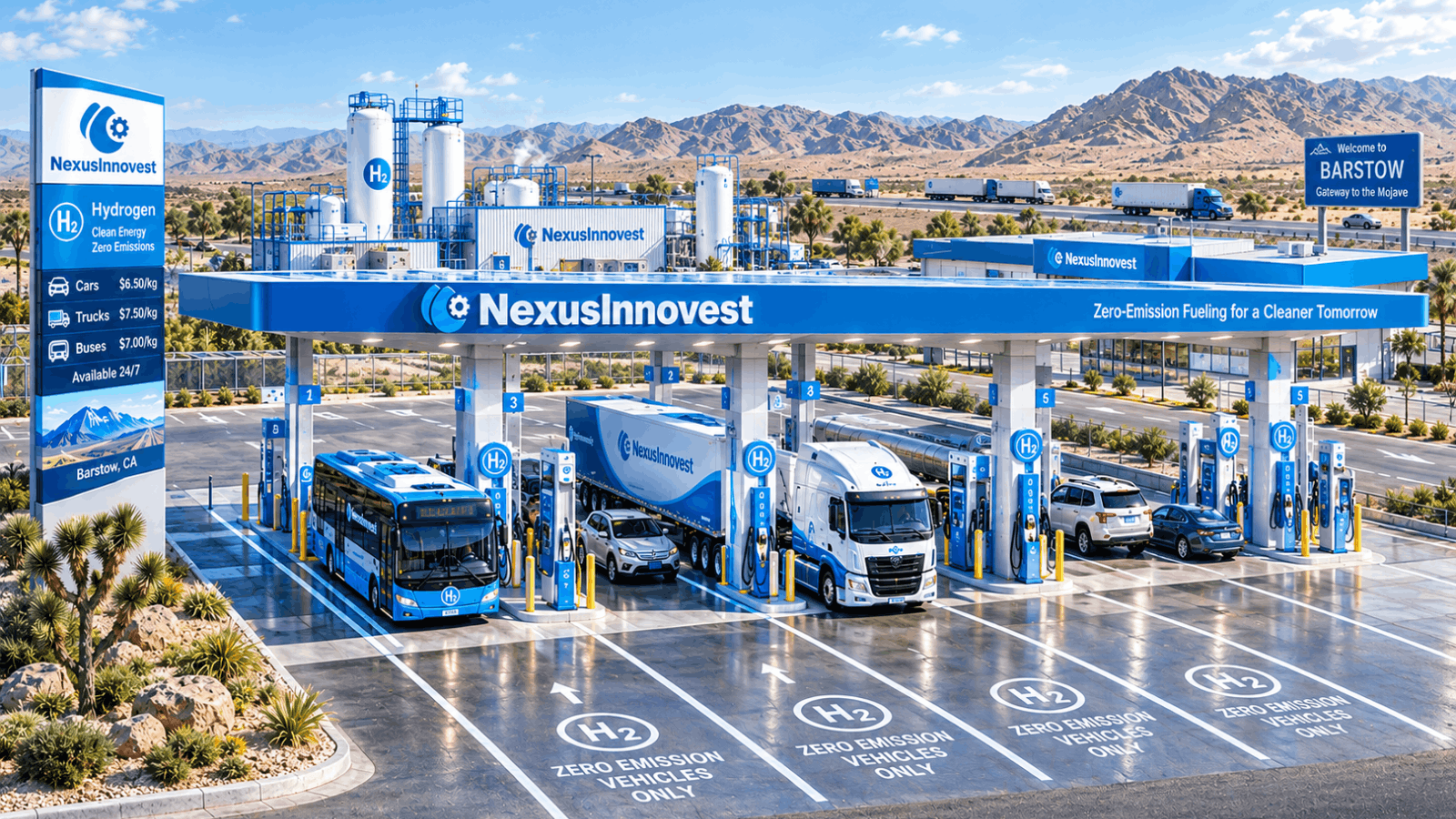
Co-branded distribution centres for all zero-emission vehicles (ZEVs)
Some transit agencies using hydrogen fuel cell buses have not been exposed to fuel supply disruptions or the pricing volatility that the light-duty vehicle (LDV) sector faces, but these factors are unequal in scope. This is because transit agencies structure long-term fixed price hydrogen supply contracts which meet larger volume needs or their or immediate O&M requirements, which up to now has relieved much of the risk from their operations while other sectors are struggling.
Over the long term, however, stability in hydrogen benchmark pricing is coming to the market — and that's precisely when cost for resiliency will be tested. At NexusInnovest, we're ready for that test today, featuring a cost-per-unit profile that is less than half of the established rate for commercially-available, renewable hydrogen. That is because our capture facilities are autonomous, decentralised and feedstocks are not dependent on filtered water, grid access for energy or the fossil-fuel derivatives that are used in steam methane reforming. That is a gamechanger for agriculture, landfill operators and even desalination, three significant areas of the economy where consumer need cannot be pushed aside and the energy demands cannot be overlooked.
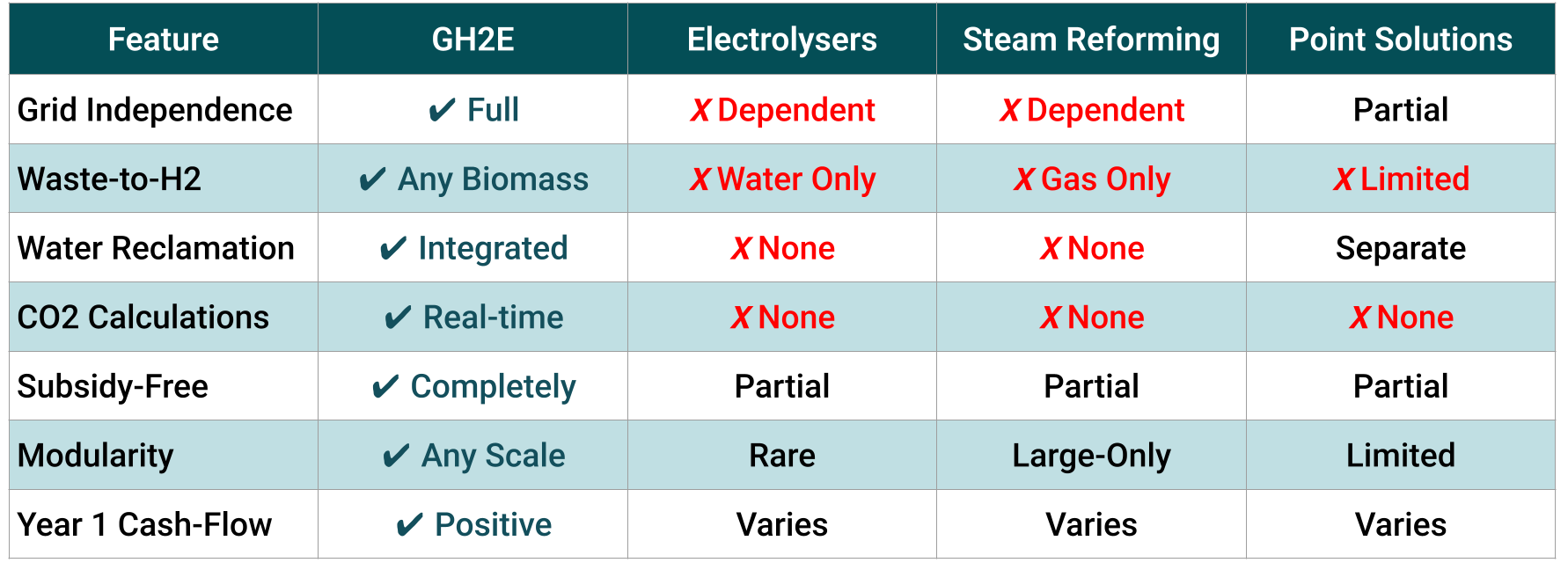 GH2E facing the competition — the cheapest and cleanest method of capturing hydrogen at any scale.
And according to the International Energy Agency (IEA), we're also future-proofed in terms of cost. Our platforms use multiple forms of waste or seawater to capture renewable hydrogen at its highest quality classification, without grants, tariffs or subsidies to make the financials work. More importantly, our capture process is already below USD$1.57 per kilogram in nearly every project scenario. That is not five or ten years in the future when costs are expected to decline — that's from today's facilities, where profitability early translates to financial sustainability.